CPU stories
Enterprise buyers in Saudi Arabia will get a locally hosted AI PC from September 2026, alongside Adobe's shift to sovereign workloads.
The tie-up could help Europe cut reliance on non-European hardware by linking classical supercomputers with emerging quantum systems.
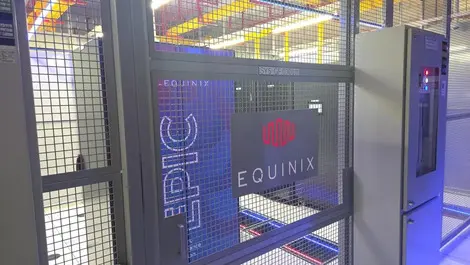
Enterprises can now test liquid-cooled AI systems in Sydney before committing to costly rollouts, as power and heat demands surge.
The tie-ups are aimed at making it easier for enterprises and cloud providers to run agentic AI in production across mixed infrastructure.
Enterprises racing to deploy AI systems can now test liquid cooling in live data centres before committing to large-scale infrastructure changes.
The blueprint could give hyperscalers and enterprises a cheaper way to run agentic AI, with flexible CPU and GPU racks and open software.
As AI workloads shift from training to inference, firms risk stranded kit unless they build systems that can adapt over five to seven years.
The update lets Windows users run bigger AI models on-device, as AMD bids to make local processing a rival to cloud-based services.
The chip aims to ease power and cooling constraints for operators seeking AI systems with tighter supply chain control and domestic manufacturing.
AI training is exposing network bottlenecks that can idle GPUs, raise costs and force operators to redesign data centres around lossless fabrics.
Local AI features could run faster, stay private and work offline as chipmakers push laptops with dedicated neural processors.
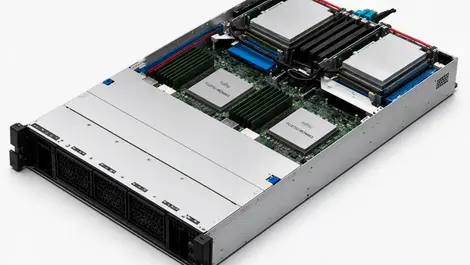
Data centre operators could cut energy use and rack space as Fujitsu's new 2nm chip targets AI inference with air cooling.
The top-end iPhone range gains AI features and a variable-aperture camera, as Apple targets better photos, battery life and performance.
The deployment will help AWS meet surging demand for AI computing as the cloud giant deepens reliance on NVIDIA hardware and robotics.
Faster on-device AI and new connectivity are now central to Apple's smallest desktop, with models aimed at creators and developers.
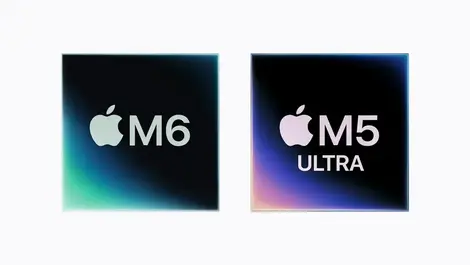
Mac users tackling AI and graphics-heavy work will get more local muscle, as Apple's latest desktop silicon pushes memory and compute higher.
It lets cloud operators pair custom XPUs with NVIDIA's rack-scale systems, aiming to cut delays and integration costs in AI build-outs.
Enterprises could cut GPU use and power costs as the open-source bundle lets Akida neuromorphic chips share IBM's scheduler for inference tasks.
Linux gamers will get smoother access to streamed titles, as Nvidia moves GeForce NOW out of beta and trims cloud gaming lag.
The deal underscores how scarce power and land have become for AI expansion, with OpenAI planning a huge Ohio facility over 20 years.